 Save to Pinterest
 One October afternoon, my kitchen filled with the smell of caramelizing butternut squash, and I realized this wasn't just soup—it was autumn in a bowl. My neighbor had dropped off three massive squashes from her garden, and I was determined not to waste a single one. That's when I discovered that roasting transforms butternut squash from merely sweet into something deeply complex, almost honeyed, with edges that catch the heat just right. The maple syrup isn't there to make it dessert; it's there to whisper in the background, letting the squash be the star.
I made this for my parents on a rainy Sunday in November, and my dad—who usually skips soup—asked for seconds and then thirds. He said it tasted like I'd somehow bottled the season and poured it into a bowl. That moment, watching him enjoy something I'd made with my own hands, made me understand why people cook for the people they love.
Ingredients
- 1 large butternut squash (about 1.2 kg / 2.5 lbs), peeled, seeded, and cubed: This is the foundation; roasting it brings out a natural sweetness that no added sugar could replicate, so don't skip that step or use raw squash.
- 1 medium yellow onion, chopped: Yellow onions soften beautifully and add a gentle sweetness that complements the squash without overwhelming it.
- 2 cloves garlic, minced: Garlic adds depth and prevents the soup from tasting one-dimensional; don't use jarred or powdered here.
- 1 liter (4 cups) vegetable broth: Use a good quality broth you'd actually drink on its own, because you'll taste every bit of it.
- 250 ml (1 cup) water: Water dilutes without adding competing flavors, letting the squash shine through.
- 120 ml (1/2 cup) coconut milk or heavy cream: Coconut milk keeps it vegan and adds tropical notes; cream makes it richer and almost silky.
- 2 tbsp pure maple syrup: Real maple syrup matters here; the fake stuff tastes thin and one-note.
- 1/4 tsp ground nutmeg and 1/2 tsp ground cinnamon: These spices are your secret weapons—they taste like home and make people ask what's in there.
- 2 tbsp olive oil: Divide this between roasting and sautéing for maximum flavor development.
- Salt and freshly ground black pepper, to taste: Always taste as you go and adjust at the end; every broth and every squash is slightly different.
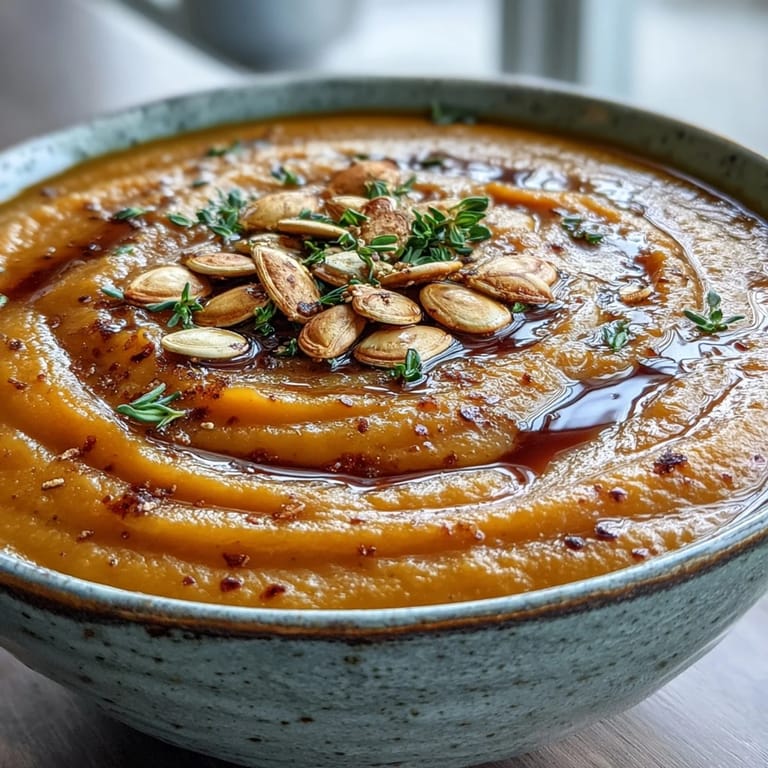
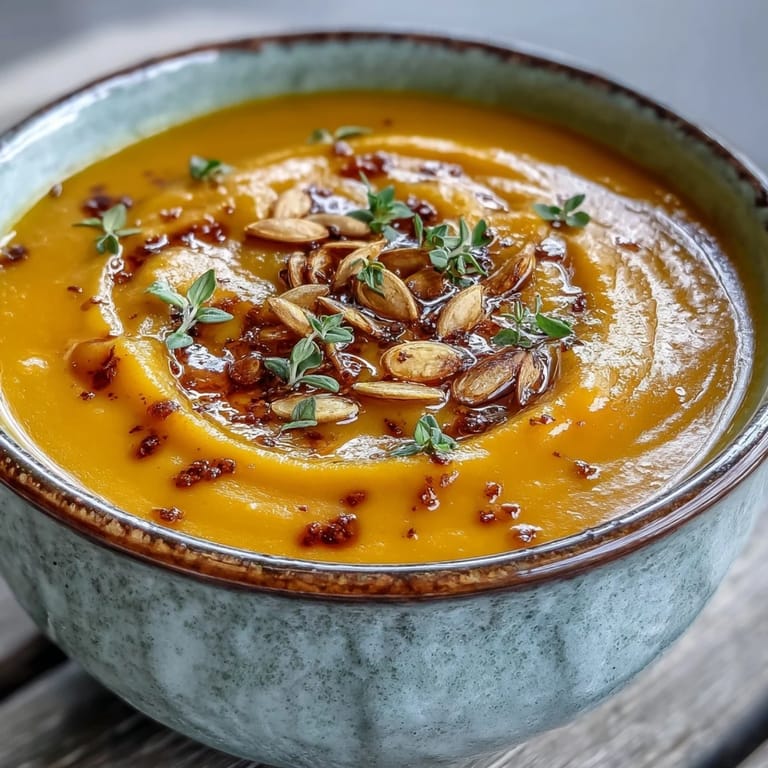
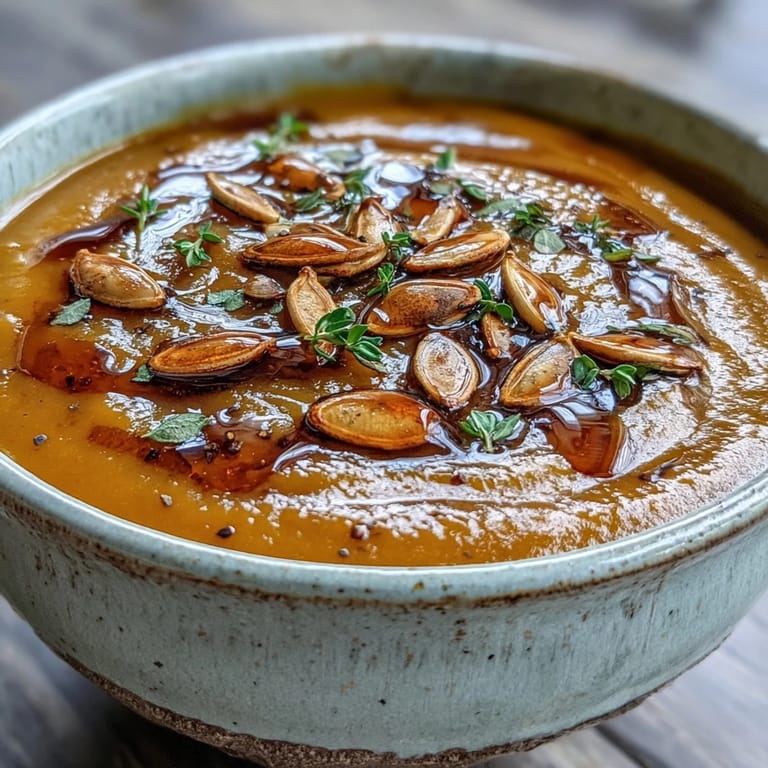
- Toasted pumpkin seeds, maple syrup drizzle, and fresh thyme (optional garnish): These aren't just decoration—they add texture and a last-minute brightness that lifts the whole bowl.
Tired of Takeout? 🥡
Get 10 meals you can make faster than delivery arrives. Seriously.
One email. No spam. Unsubscribe anytime.
Instructions
- Heat your oven and prepare the squash:
- Preheat to 200°C (400°F) and arrange your cubed butternut squash on a baking sheet. Drizzle with 1 tablespoon of olive oil, season generously with salt and pepper, and toss everything together until each piece is coated—this is where the magic starts, as the oil helps the squash caramelize rather than just roast.
- Roast until golden and tender:
- Spread the squash in a single layer and roast for 30–35 minutes, turning the pieces halfway through. You'll know it's done when the edges turn deep golden-brown and the flesh is so tender a fork slides through it; that caramelization is what gives this soup its depth.
- Build your flavor base:
- While the squash roasts, heat 1 tablespoon of olive oil in a large pot over medium heat. Add your chopped onion and let it cook for 4–5 minutes until it turns translucent and smells sweet, then add the minced garlic and cook for just 1 minute more—garlic burns quickly, so watch it.
- Combine everything:
- Add the warm roasted squash to the pot along with your vegetable broth, water, maple syrup, nutmeg, and cinnamon. Stir well to break up any clumps and distribute the spices evenly.
- Simmer to meld flavors:
- Bring the pot to a boil, then immediately lower the heat and let it simmer gently for 10 minutes. This short simmer lets all the flavors talk to each other without cooking away the brightness of the squash.
- Blend until silky:
- Use an immersion blender right in the pot, working it slowly through the soup until it's completely smooth and creamy. If using a countertop blender, work in batches and never fill it more than halfway, then return the blended soup to the pot.
- Finish with cream and adjust seasoning:
- Stir in your coconut milk or heavy cream, then taste a spoonful and adjust the salt, pepper, or spices to your preference. Add more maple syrup if you want it sweeter, or a pinch of cayenne if you want a gentle heat underneath.
- Serve with intention:
- Ladle the soup into bowls and top with toasted pumpkin seeds, a light drizzle of maple syrup, and a few fresh thyme leaves if you have them. These garnishes aren't just pretty; they add texture and a fresh bite that keeps the soup from feeling heavy.
 Save to Pinterest
 There's something almost meditative about blending hot soup, watching it transform from chunky to velvet in seconds. The aroma that rises from the pot during that final blend—warm spices mixing with caramelized squash and cream—is worth the price of admission alone.
The Roasting Secret
Roasting is what separates this soup from every mediocre butternut squash soup you've ever had. When you roast the squash instead of boiling it, the water evaporates and the natural sugars concentrate, caramelizing at the edges. The Maillard reaction happens—that browning that creates hundreds of new flavor compounds—and suddenly you have depth and complexity that no amount of added sugar could fake. I learned this the hard way by making it the lazy way first, and the difference was so stark I've never looked back.
Cream Versus Coconut Milk
The choice between heavy cream and coconut milk isn't just about diet; it changes the personality of the soup. Heavy cream makes it feel luxurious and silky, almost like you're spoiling yourself on a weeknight. Coconut milk keeps it lighter and adds a subtle tropical note that plays beautifully with the cinnamon and nutmeg. I've made it both ways for different people, and I've never had anyone refuse a second bowl regardless of which version showed up in their bowl.
Make It Your Own
Once you understand the base of this soup, you can start playing with it. I've added a pinch of smoked paprika for depth, a whisper of cayenne for warmth, even a splash of apple cider instead of water. The foundation is solid enough to support whatever your kitchen and your mood suggest. The spices and maple syrup are there as a guide, not as law.
- Add a pinch of cayenne pepper or smoked paprika if you want subtle heat or earthiness.
- Swap half the water for apple cider or apple juice if you want to lean into the autumn flavors.
- Top with crispy sage leaves or crème fraîche instead of pumpkin seeds for a different texture.
 Save to Pinterest
 This soup has become my go-to when I want to feel like I'm taking care of myself or the people I'm feeding. It's simple enough to make on a Tuesday night but tastes like you spent all day on it.
Recipe Questions & Answers
- → Can I make this soup ahead of time?
Yes, this soup stores beautifully in the refrigerator for up to 4 days or can be frozen for up to 3 months. Reheat gently on the stovetop, adding a splash of broth if needed to adjust consistency.
- → What can I substitute for maple syrup?
Honey or brown sugar work well as alternatives, though maple syrup provides the most authentic flavor profile. Use the same amount for sweetness balance.
- → Do I have to roast the butternut squash?
While not strictly necessary, roasting caramelizes the natural sugars and adds depth of flavor. You can simmer raw cubes directly in broth, but the taste will be less complex.
- → How do I make this soup creamier?
Increase the coconut milk or heavy cream to 1 cup, or add a few tablespoons of cream cheese while blending. A potato or two simmered with the squash also creates extra body.
- → Can I use pre-cut butternut squash?
Absolutely! Pre-cut squash saves significant prep time. Just ensure the pieces are similar in size for even roasting and adjust cooking time if pieces are smaller.
- → What pairs well with this soup?
Crusty sourdough bread, grilled cheese sandwiches, or a crisp autumn salad with apples and walnuts make excellent companions to this warming soup.