 Save to Pinterest
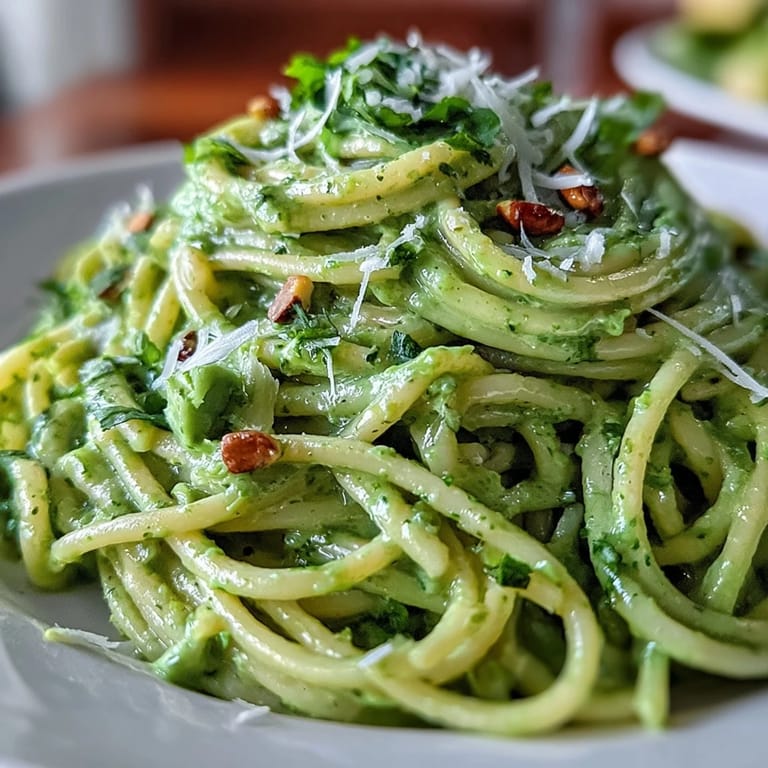
 The first time I made avocado pesto pasta, the kitchen filled with the intoxicating scent of basil and just-grated Parmesan, and I found myself humming without realizing. It was one of those sweltering summer nights that begged for something bright and satisfying, but turning on the oven was absolutely out of the question. I remember squeezing the lemon and accidentally splattering a few drops across the countertop—my cue that this dish was best made spontaneously and without fuss. The sauce came together in a whirl of green, smooth and vivid, leaving my fingers scented with garlic and herbs. There was a giddy anticipation as the pasta tumbled in the bowl, coated in lush avocado creaminess, miles away from any store-bought jar.
One afternoon, my neighbor dropped by while I was mixing the pesto and she couldn’t stop marveling at the color. We ended up eating forkfuls straight from the pot, chasing the tangy lemon and nutty crunch, and declaring it our new weeknight lifesaver. Even my basil-averse friend admitted defeat and took a second helping. That impromptu taste test made me realize how each bowl seemed to disappear even faster than it was made.
Ingredients
- Pasta: I use spaghetti or linguine for the way strands catch the sauce, and gluten-free pasta swaps in easily for guests with allergies—just don’t overcook it.
- Avocados: Choose perfectly ripe avocados for maximum creaminess; firm avocados will never blend as smooth, so plan ahead.
- Fresh basil leaves: Plenty of basil brings fragrance and a fresh green punch, and I always give the leaves a quick rinse and spin dry before using.
- Pine nuts: These give a buttery richness—when I run out, walnuts are a satisfying substitute and slightly more wallet-friendly.
- Garlic: Only two small cloves needed, but don’t skip them; once I tried one and the flavor fell flat.
- Parmesan cheese: Freshly grated Parmesan melts seamlessly into the sauce and gives it savory depth—pre-grated never delivers the same joy.
- Lemon juice: I squeeze it fresh to control the tang and always strain out any seeds so they don’t surprise anyone at the table.
- Extra virgin olive oil: Adds silkiness and ties the pesto together, so reach for your best bottle if you can.
- Salt and pepper: Generously season to taste; don’t be shy—good seasoning wakes up every other ingredient.
- Extra Parmesan, fresh basil, and lemon zest (to serve): These are my favorite finishing touches for a little extra flair and pop.
Tired of Takeout? 🥡
Get 10 meals you can make faster than delivery arrives. Seriously.
One email. No spam. Unsubscribe anytime.
Instructions
- Boil the Pasta:
- Fill a large pot with salted water and bring to a roar, then add your pasta and stir occasionally so it doesn’t clump. Cook until al dente, then scoop out a cup of pasta water before draining so you’re prepared for creamy tossing later.
- Blend the Sauce:
- Toss ripe avocados, basil, pine nuts, garlic, Parmesan, lemon juice, and olive oil into your food processor or blender. Blend until everything becomes silky and smooth, pausing to scrape down the sides and season generously with salt and pepper.
- Dress the Pasta:
- Return your drained pasta to the warm pot and immediately spoon over the pesto, adding a splash of reserved cooking water. Toss vigorously until every noodle glistens with green, adding more water if you crave creaminess.
- Serve and Garnish:
- Divide pasta among bowls or pile it onto one big platter, then shower with extra Parmesan, sprigs of basil, and a little lemon zest if you’re feeling fancy. Serve while the sauce is bold and bright—the fresher, the better.
 Save to Pinterest
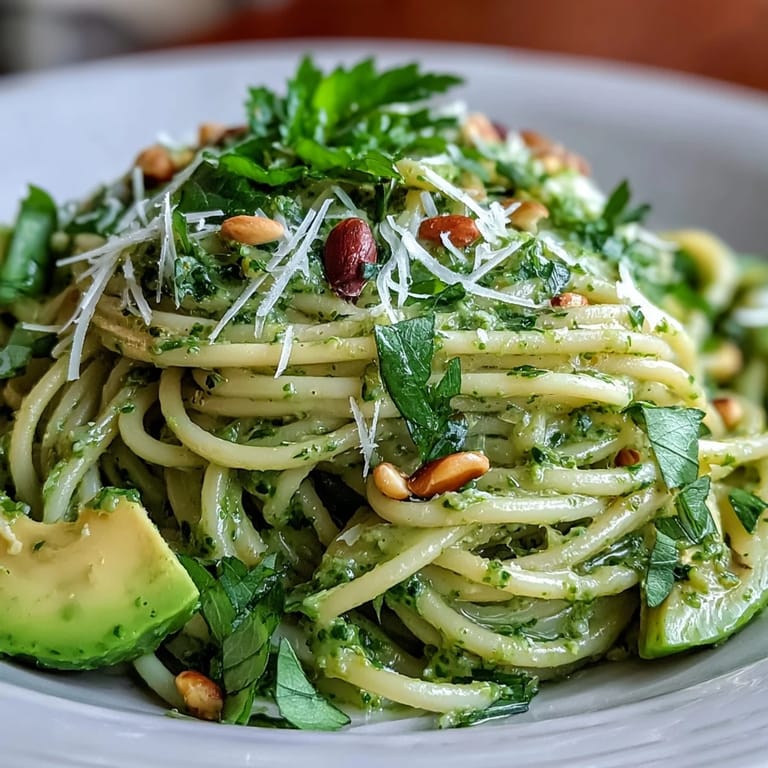
 One evening, we ate this together out on the balcony with nothing but a pitcher of lemonade and laughter to go with it, and I realized a bowl of pasta could turn even a Tuesday night into a bit of a celebration. It was one of those simple moments where the food made us linger at the table, not ready for the night (or the conversation) to end.
Making Avocado Pesto Your Own
I’ve tried tossing in cherry tomatoes or a handful of arugula to change up the color and add a peppery kick, and it always feels like a playful experiment. If I’m feeling a little extra, a few roasted vegetables or even a handful of grilled chicken turns the pasta into a more substantial meal. And my favorite part is that the pesto adapts every time, staying just as easy and forgiving as the first batch.
Ingredient Swaps and Variations
The simplicity of this recipe makes it a perfect canvas for all sorts of swaps. When pine nuts are nowhere to be found, walnuts and even almonds bring their own personality to the pesto. If you’re cooking for vegan friends, leave out the Parmesan or try a vegan substitute—no one will complain about the flavor.
Serving and Storage Tips
Once the pasta is tossed, I recommend serving it right away—the bright green avocado sauce is at its best while fresh. Leftovers lose their charm as the avocado darkens, so I only make as much as we need. Here are a few last tips for success:
- If you must store leftovers, press a piece of plastic wrap against the sauce surface to slow browning.
- Warm up leftovers gently with a splash of water to loosen the sauce.
- Give the pasta a good toss before serving again for best flavor.
 Save to Pinterest
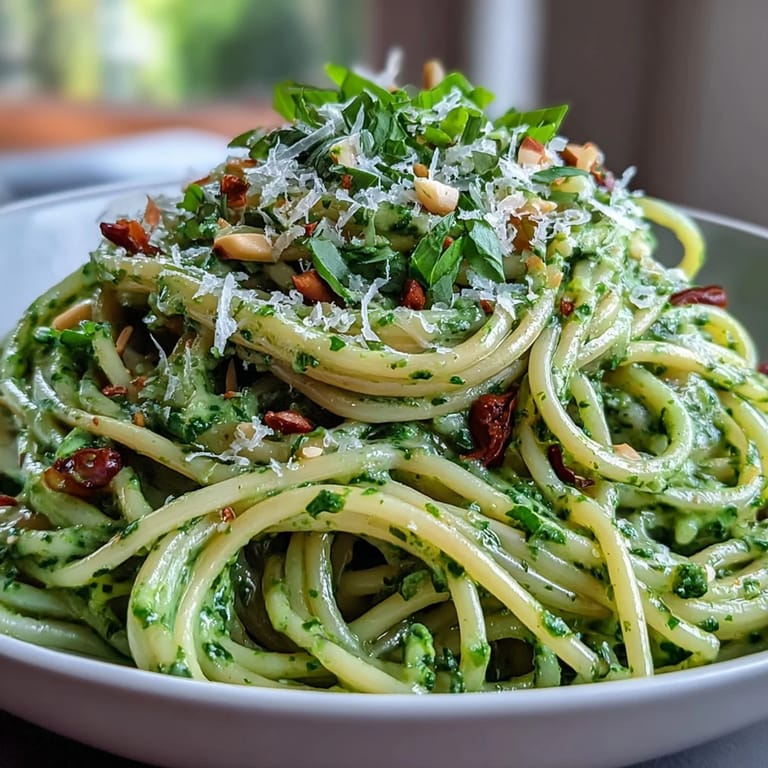
 Try this pasta the next time you need something quick but want a meal that feels like a treat. The best stories (and flavors) are often the ones that happen with barely any planning at all.
Recipe Questions & Answers
- → How do I prevent the avocado sauce from browning?
Use ripe but firm avocados and add lemon juice during blending; serve immediately. If storing briefly, press plastic wrap onto the surface to limit air contact and refrigerate up to a few hours.
- → What can I substitute for pine nuts?
Use toasted walnuts, almonds, or sunflower seeds for a similar texture and nutty flavor. Toasting intensifies flavor and reduces raw bitterness.
- → How do I make this dairy-free or vegan?
Omit the Parmesan or replace it with a vegan hard-cheese alternative or nutritional yeast to add savory depth without dairy.
- → How much pasta water should I add?
Start with 2–3 tablespoons of reserved starchy pasta water and add more as needed to reach a silky, clingy sauce that coats the strands without becoming watery.
- → Can I use short pasta instead of spaghetti?
Yes—penne, fusilli, or rigatoni work well. Short shapes hold the avocado pesto in their crevices for a more textured bite.
- → Is it safe to prepare the sauce ahead?
Make the sauce up to a few hours ahead and keep chilled with plastic wrap pressed on the surface; expect slight darkening over time, which can be refreshed with extra lemon and a quick blend.