 Save to Pinterest
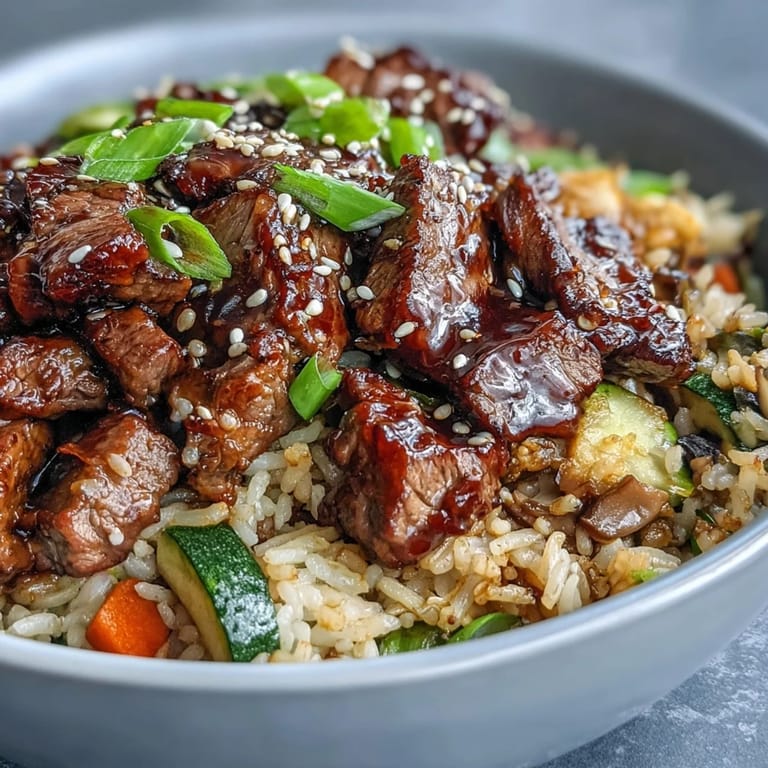
 My sister called from across the country one evening, frustrated about dinner. She wanted something that tasted like the hibachi place downtown but without the price tag or the wait. So I walked her through making this steak and fried rice in one pan, and twenty minutes later she texted back a photo of her plate with three celebration emojis. That's when I realized this dish had become my go-to answer for when people want restaurant quality without the fuss.
I made this for a weeknight dinner party once, and watched my friends' faces light up when they realized I'd cooked it all right there in front of them on one skillet. One guest kept saying it was better than the hibachi restaurant she'd been to last month, which I'm still riding on weeks later.
Ingredients
- Sirloin steak, cut into 1-inch cubes (1 lb): Sirloin stays tender and affordable, and the smaller cubes mean it cooks fast without sacrificing those charred edges you're after.
- Low-sodium soy sauce (3 tbsp total): This is your umami backbone—don't skip it, and taste before adding more because salty dishes are hard to fix.
- Mirin or dry sherry (1 tbsp): Mirin brings a subtle sweetness that rounds out the savory notes; if you don't have it, a splash of honey works in a pinch.
- Sesame oil (1 tbsp): Use the toasted kind for that rich, nutty flavor that makes people ask what your secret ingredient is.
- Garlic clove, minced (1): Fresh garlic matters here—jarred won't give you that punch you need.
- Ground black pepper (1/2 tsp): Freshly cracked is always better, and don't be shy with it.
- Jasmine rice, cooked and cooled (3 cups): Day-old rice is non-negotiable; fresh rice turns to mush, which I learned the hard way on my first attempt.
- Vegetable oil (2 tbsp, divided): Any neutral oil works—canola, vegetable, or peanut all handle the high heat beautifully.
- Small onion, diced (1): Yellow onions are your friend here because they caramelize slightly and add natural sweetness.
- Carrots, diced (1 cup): Cut them small so they soften in the time frame without turning to mush.
- Zucchini, diced (1 cup): Green zucchini adds color and a light, subtle flavor that doesn't overpower the steak.
- Mushrooms, sliced (1 cup): Cremini or baby bellas work best; they add an earthy depth that elevates the whole dish.
- Frozen peas (1 cup): Frozen is actually ideal here because they stay bright green and firm.
- Large eggs, lightly beaten (2): These create little ribbons through the rice that make it look and taste restaurant-quality.
- Unsalted butter (1 tbsp): Added at the end, this is what creates that slight crispiness and golden color on the rice.
- Green onions, thinly sliced (2): Use the white and light green parts in the pan, save the dark green tops for garnish to keep them fresh and bright.
- Salt and pepper to taste: Always taste before serving because everyone's salt tolerance is different.
- Sesame seeds for garnish (optional): A sprinkle adds texture and that final touch of authenticity.
Tired of Takeout? 🥡
Get 10 meals you can make faster than delivery arrives. Seriously.
One email. No spam. Unsubscribe anytime.
Instructions
- Marinate your steak:
- Toss your cubed steak with soy sauce, mirin, sesame oil, garlic, and pepper in a bowl and let it sit while you prep everything else. This step takes ten minutes and transforms tough cuts into tender, flavorful bites.
- Sear the steak until it's golden:
- Heat oil in a large skillet or wok over medium-high heat and add the steak, letting it sit for a minute before stirring so it gets a nice brown crust. You'll know it's ready when it smells incredible and the outside has caramelized edges.
- Cook your vegetables with confidence:
- Push the steak aside, add more oil to the pan, and sauté onion, carrots, zucchini, and mushrooms until they're tender-crisp, about four to five minutes. You want them soft enough to eat but still with a little bite.
- Scramble your eggs in the same pan:
- Push the vegetables to the sides and pour in your beaten eggs, stirring gently until they're just set into soft curds. This usually takes two to three minutes and smells like a promise of something delicious.
- Combine everything and finish strong:
- Add your day-old rice, peas, and cooked steak back to the pan along with soy sauce, then toss everything together, breaking up rice clumps as you go. Cook for another couple minutes until the rice picks up some color and the butter melts in.
- Taste and adjust before serving:
- This last step is crucial—pinch of salt, grind of pepper, whatever it needs to sing on your palate. Serve immediately with sesame seeds and green onions on top.
 Save to Pinterest
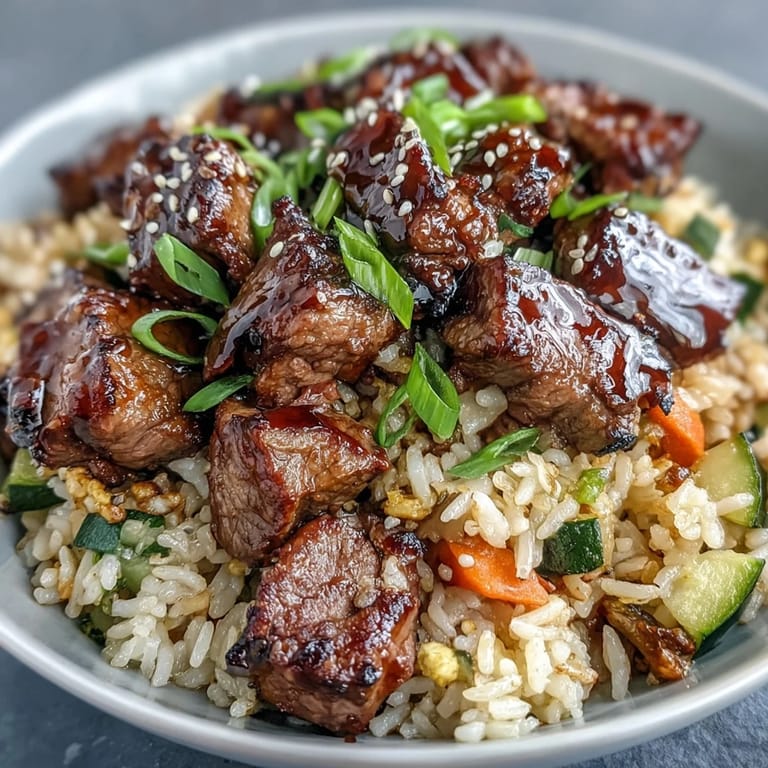
 There's a moment when you add the rice to the pan and the whole thing comes together with that satisfying sizzle—that's when this dish stops being a weeknight meal and becomes something you're genuinely proud of. My nephew asked for seconds before I'd even finished plating his first serving, and that's all the validation any home cook needs.
The Secret to Crispy Rice
The magic happens when you let the rice sit undisturbed in the hot pan for the last minute or two after everything is combined. That's when it develops those golden, slightly crispy edges that taste like the best part of someone else's takeout container. Don't stir constantly—be patient and let the heat do its work.
Why Cold Rice Changes Everything
Fresh, warm rice has too much moisture trapped in the grains, so when it hits the hot pan, it releases all that steam and turns into a mushy, stuck-together mess. Cold rice has already dried out slightly, so it stays separate and crispy instead of clumping. This is the difference between a dish you're proud of and one you're apologizing for.
Timing and Temperature Matter More Than You'd Think
This dish comes together fast, which means having everything prepped and ready before you turn on the heat is the difference between smooth sailing and scrambling. Medium-high heat is your sweet spot—too low and nothing gets those caramelized edges, too high and things burn before they cook through. Once you nail the temperature, you'll find yourself making this constantly because it never feels rushed.
- Prep all your vegetables and have your rice ready before you start cooking, because once you begin, there's no time to chop.
- Keep the heat consistent and don't walk away from the pan—this dish needs attention but rewards you with speed.
- If you're feeding more than four people, make it in batches rather than overcrowding the pan, because space is how ingredients become delicious.
 Save to Pinterest
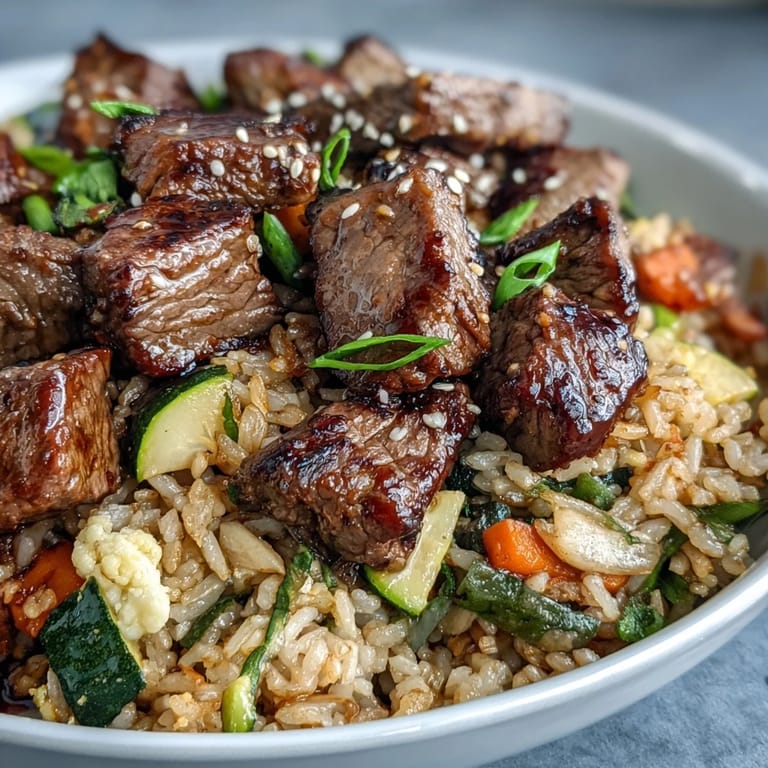
 This is the kind of meal that reminds you why cooking at home matters—it's faster than delivery, costs less, and tastes like someone who loves you made it. Once you master this one-pan hibachi, you'll be making it on autopilot while impressing everyone who sits down to eat.
Recipe Questions & Answers
- → What type of steak works best for hibachi?
Sirloin steak is ideal for hibachi because it's tender, flavorful, and holds up well to high-heat cooking. You can also use ribeye, flank steak, or even skirt steak. Cut the steak into uniform 1-inch cubes for even cooking.
- → Why use day-old rice for fried rice?
Day-old rice has dried out slightly, which prevents it from becoming mushy or sticky during stir-frying. Freshly cooked rice contains too much moisture and won't develop that characteristic crispy texture. If you're in a pinch, spread freshly cooked rice on a baking sheet and refrigerate for 30 minutes before using.
- → Can I make this dish gluten-free?
Yes, simply substitute regular soy sauce with tamari or coconut aminos. Both provide the salty umami flavor without gluten. Also verify that your mirin is gluten-free, or replace it with additional soy sauce and a pinch of sugar.
- → What vegetables can I add or substitute?
Traditional hibachi vegetables include onions, carrots, zucchini, and mushrooms, but you can also add bell peppers, broccoli florets, snap peas, or bean sprouts. For a lower-carb version, substitute cauliflower rice for the jasmine rice.
- → How do I get restaurant-style smoky flavor at home?
The combination of high heat, sesame oil, and butter creates that signature hibachi aroma. For extra smokiness, you can add a drop of liquid smoke to the marinade or use a cast-iron skillet which retains heat exceptionally well. Don't overcrowd the pan—this allows proper searing and caramelization.
- → Can I prepare components in advance?
Absolutely. You can marinate the steak up to 24 hours ahead. The vegetables can be diced and stored in airtight containers in the refrigerator for 2-3 days. Having day-old rice ready makes the actual cooking time just 15-20 minutes.