 Save to Pinterest
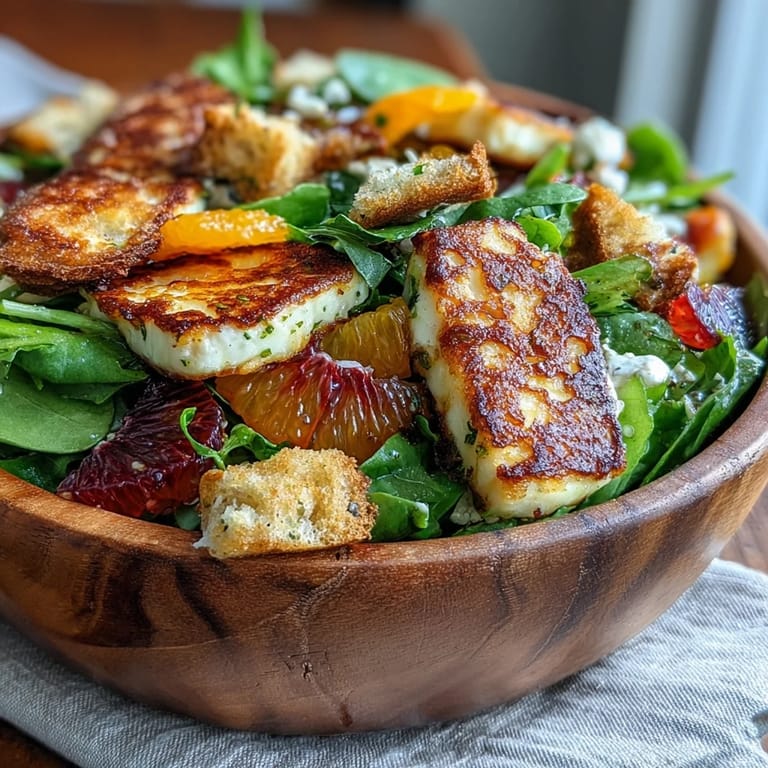
 Blood oranges showed up at the market one February morning, and I immediately thought of halloumi—that squeaky, salty cheese that transforms under heat. I'd been craving something bright and unexpected, something that felt both comforting and adventurous. That afternoon, I built this salad around the warm cheese and jewel-toned citrus, and suddenly lunch became the best part of my day. The crunch of sourdough croutons and the tangy sumac dressing turned what could have been a simple side into something I found myself making again and again.
I made this for my sister last spring when she showed up unannounced after a difficult week. She sat at the counter while I moved between the stove and cutting board, and something about watching the halloumi turn golden seemed to settle her. We ate straight from the serving bowl, and she went back for thirds. That's when I knew this salad had become something more than a recipe—it was comfort disguised as brightness.
Ingredients
- Halloumi cheese, 200 g sliced into 1 cm pieces: Choose blocks that feel firm and slightly squeaky when you slice them—older halloumi gets rubbery. Leaving the slices thick enough means they'll develop a golden crust while staying creamy inside.
- Blood oranges, 2 whole: Their deep crimson flesh and subtle tartness set them apart from regular oranges; if you can't find them, regular oranges work but you'll lose some of that jewel-like drama.
- Mixed salad greens, 150 g (romaine, arugula, parsley, mint): The herbs matter as much as the greens here—they bring an herbal brightness that balances the richness of the cheese.
- Cucumber, 1 small diced: Keep the skin on for color and texture unless it's particularly thick or bitter.
- Cherry tomatoes, 8 halved: Summer tomatoes are ideal, but if you're making this in winter, look for the smallest, ripest ones you can find.
- Red onion, ½ small thinly sliced: The thinness matters—it releases the onion's natural sweetness rather than leaving you with harsh bites.
- Radishes, 2 thinly sliced: They add a peppery snap that keeps the salad from feeling too sweet or soft.
- Sourdough bread, 2 thick slices cut into cubes: Day-old bread is your friend here—it will crisp up beautifully without becoming a hard rock.
- Olive oil, 5 tbsp total (2 for croutons, 3 for dressing): Use something you actually like drinking; cheap oil will taste cheap.
- Lemon juice, 1½ tbsp fresh squeezed: Bottled juice will never give you that brightness—it's worth the thirty seconds of squeezing.
- Pomegranate molasses, 1 tbsp: This ingredient is what makes people ask for the recipe; it's a quiet, sophisticated sourness that regular vinegar can't replicate.
- Sumac, 1 tsp: If you've never used sumac, this is your moment—it tastes lemony and slightly floral, with no heat whatsoever.
- Sea salt and black pepper: Taste as you go; the dressing should make your mouth water slightly.
Tired of Takeout? 🥡
Get 10 meals you can make faster than delivery arrives. Seriously.
One email. No spam. Unsubscribe anytime.
Instructions
- Make your croutons golden:
- Preheat your oven to 200°C and toss sourdough cubes with olive oil and sea salt until they're coated but not swimming. Bake for 8–10 minutes, stirring halfway through if you remember, until they're the color of wheat and smell irresistible—they'll continue crisping as they cool.
- Fry the halloumi until it's warm and welcoming:
- Heat a non-stick skillet over medium heat, and once it's hot enough that a drop of water sizzles, lay in your halloumi slices. Let them sit for 2–3 minutes until they're golden on one side, then flip and do the same on the other side—you want a tender, melted center with a crispy exterior.
- Build your salad base:
- In a large bowl, combine your greens, cucumber, tomatoes, red onion, radishes, and blood orange segments. This is where the salad lives before the magic happens—keep it loose and breathing.
- Whisk your dressing into being:
- In a small bowl, combine olive oil, lemon juice, pomegranate molasses, sumac, black pepper, and salt. Whisk until it tastes like you want it to—tangy, balanced, compelling enough to drink with a spoon.
- Bring everything together:
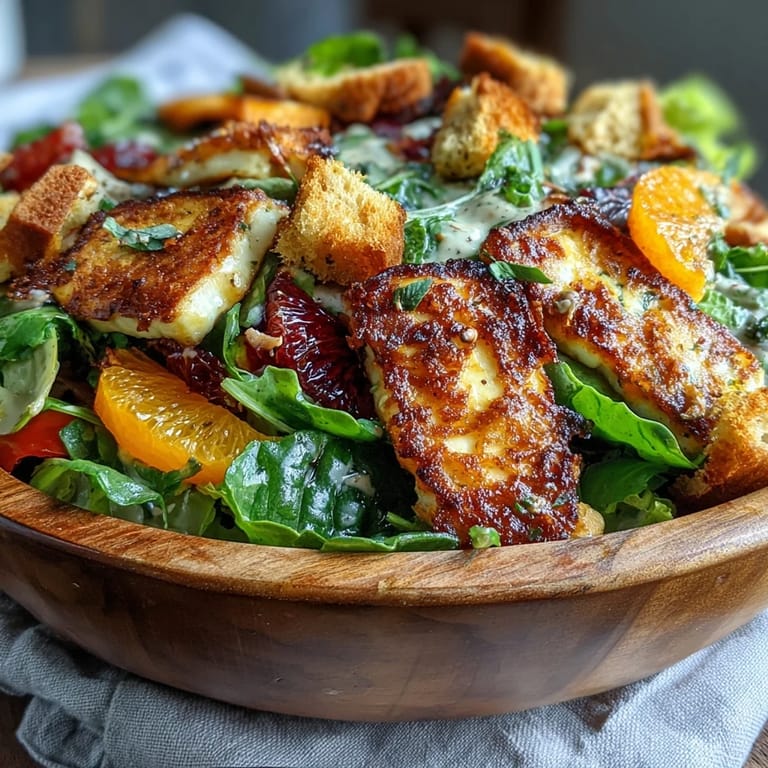
- Add the warm halloumi and crispy croutons to your salad bowl, drizzle generously with dressing, and toss gently so nothing breaks. The warmth of the cheese will slightly wilt the greens while keeping everything alive and present.
- Serve immediately:
- Don't let this sit—the moment everything comes together is when it's at its best, warm cheese meeting cool greens and bright citrus.
 Save to Pinterest
 My neighbor asked me for this recipe after tasting it once, and now it's become our unofficial language for hosting each other. We text photos of our versions—sometimes with pistachios, sometimes with pomegranate seeds, once even with a drizzle of honey nobody asked for. That's when I understood that the best recipes aren't the ones we guard jealously; they're the ones that give us permission to make them our own.
Why Sumac Changes Everything
Before I discovered sumac, I thought tartness only came from lemon and vinegar. But sumac arrived in my kitchen one Tuesday afternoon, and suddenly this salad became something entirely different. It has this almost fruity brightness that makes people pause mid-bite and ask what that flavor is—it's tangy without being aggressive, and it rounds out the sweetness of the blood oranges in the most elegant way.
The Halloumi Question
Halloumi is one of those ingredients that seems intimidating until you realize it actually wants to be fried. The first time I cooked it, I barely heated the pan and ended up with a sad, barely-melted slice; the second time, I went too hot and it started to brown before it could get soft. Now I know that medium heat and patience are the only rules—give it time to develop that golden crust, and it'll reward you with warmth and creaminess. Once you find that sweet spot, you'll make this salad constantly because you'll trust your instincts.
Timing and Variations That Keep It Fresh
This salad lives in that perfect zone where it's easy enough for a Wednesday dinner but interesting enough for guests. The base is flexible—I've made it with walnuts when I wanted earthiness, with pomegranate seeds when I wanted color, and even with a handful of fresh feta when halloumi seemed too heavy. The thing that stays constant is the dressing and that combination of warm and cool, crispy and soft. What makes this work is respecting the bones of it while giving yourself permission to improvise.
- Add toasted pistachios or walnuts for a nutty depth that plays beautifully with the sumac.
- Pomegranate seeds scattered on top add visual drama and little pockets of tartness.
- If you can't find blood oranges, pink grapefruit gives you that same jewel-toned elegance and a slightly different tartness.
 Save to Pinterest
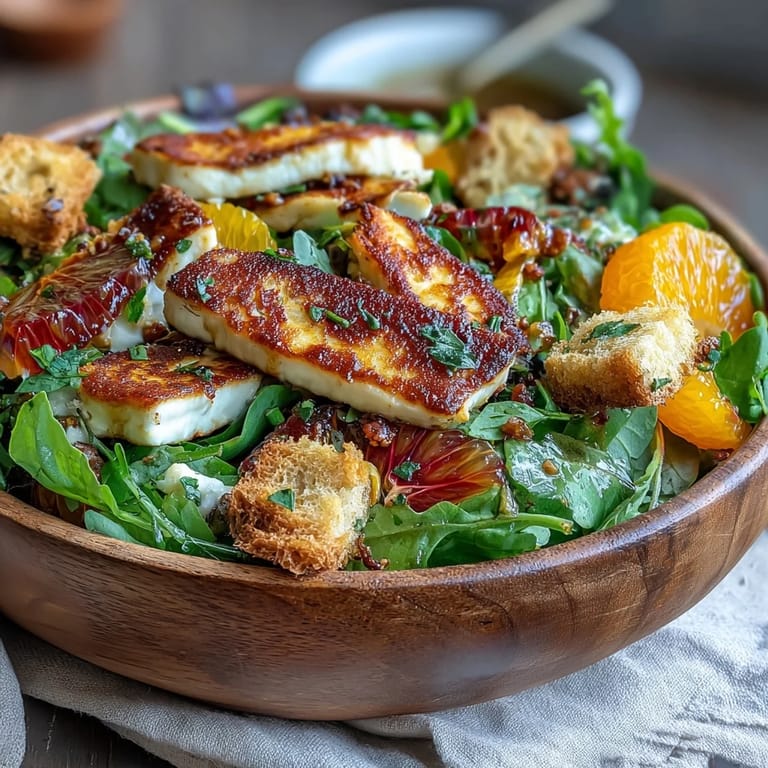
 This salad taught me that sometimes the most memorable meals come from simple ingredients treated with respect and curiosity. It's the kind of dish that reminds you why you love cooking.
Recipe Questions & Answers
- → What makes fattoush different from other salads?
Fattoush is a Middle Eastern salad characterized by crispy bread pieces and a tangy sumac dressing. Unlike standard green salads, it combines toasted or fried bread with fresh vegetables and citrus for a mix of textures and flavors.
- → Can I prepare halloumi ahead of time?
Halloumi is best served warm and freshly fried for optimal texture. However, you can prep all vegetables and the dressing in advance. Fry the halloumi just before serving to maintain its golden exterior and soft, salty interior.
- → What can I substitute for blood oranges?
Regular oranges, pink grapefruit, or even mandarins work well as alternatives. While blood oranges offer a unique color and slightly berry-like flavor, other citrus varieties provide similar acidity and sweetness to balance the salty halloumi.
- → Is this salad gluten-free?
As written, this salad contains gluten from the sourdough bread croutons. To make it gluten-free, simply substitute with gluten-free bread cubes or omit the croutons entirely. The remaining ingredients are naturally gluten-free.
- → How do I store leftovers?
This salad is best enjoyed immediately while the halloumi is warm and croutons remain crispy. If you must store leftovers, keep the dressing, croutons, and salad components separate. Reheat halloumi gently in a pan and toss just before serving.
- → What protein can I add for more substance?
While halloumi provides protein, you can add grilled chicken, chickpeas, or lentils for extra heartiness. These additions work well with the Middle Eastern flavor profile without overpowering the delicate citrus and sumac notes.