 Save to Pinterest
 There's something about assembling a Mediterranean salad that feels less like cooking and more like painting with vegetables. My neighbor Maria once caught me in the garden on a summer afternoon, debating whether to use arugula or baby spinach, and she laughed—said the real magic wasn't in choosing perfectly, it was in tossing everything together with good olive oil and not overthinking it. That conversation stuck with me, especially when life gets rushed and I need something that tastes like sunshine in a bowl without any fussing.
I made this for my sister's baby shower last spring, and watching people come back for thirds surprised us both. She'd mentioned craving something fresh and light, not heavy or pretentious, and this salad sat there on the table getting compliments while fancier dishes sat untouched. By the end of the day, I realized the simplest thing I'd brought was what people actually remembered.
Ingredients
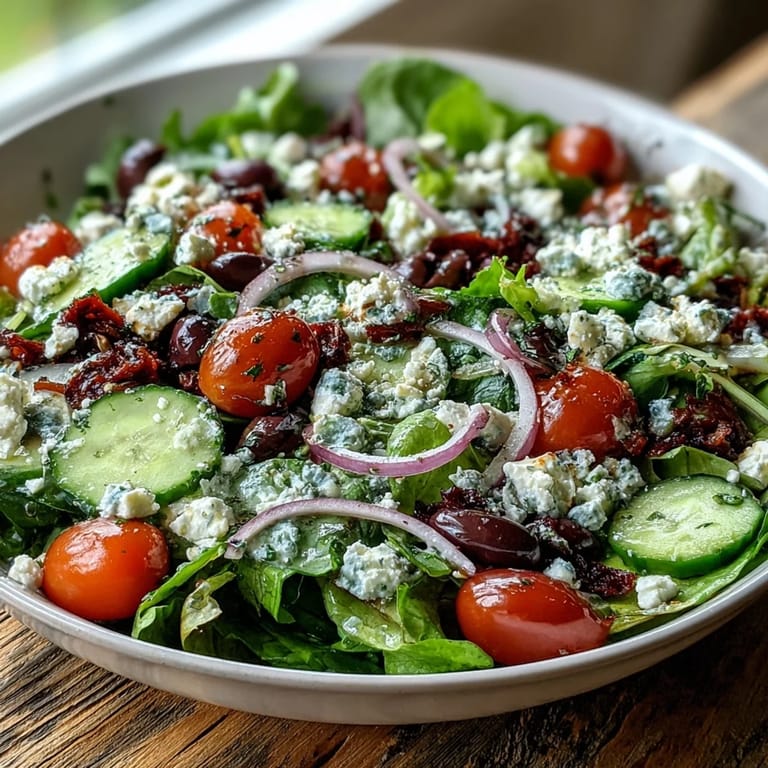
- Spring mix (5 cups): Buy the pre-washed kind if your schedule is packed—baby lettuces and arugula together give you peppery depth without any bitterness that raw spinach alone would bring.
- Cherry tomatoes (1 cup, halved): Summer tomatoes make all the difference, but winter ones work fine too if you choose the ones that actually smell like tomato.
- Cucumber (1 cup, sliced): Persian cucumbers are thinner and less watery than English ones, though either works beautifully.
- Kalamata olives (1/2 cup, pitted and halved): These briny little gems are what makes this taste authentically Mediterranean—don't skip or substitute them lightly.
- Red onion (1/4 cup, thinly sliced): The sharp bite of red onion is what keeps this salad from tasting timid or one-note.
- Feta cheese (3.5 oz, crumbled): Buy it in blocks if you can and crumble it yourself—pre-crumbled feta tastes like sadness by comparison.
- Extra-virgin olive oil (1/4 cup): This is not the place to save money; use one you'd actually want to taste on its own.
- Red wine vinegar (2 tbsp): The acidity here is what makes the dressing sing and prevents everything from tasting flat.
- Dried oregano (1 tsp): Fresh oregano is lovely if you have it, but dried oregano actually gives you that authentic Greek flavor memory.
- Garlic clove (1, minced): Fresh garlic makes the dressing taste alive; don't even consider the jarred version.
- Dijon mustard (1/2 tsp): This tiny amount acts like a silent hero, helping the dressing emulsify without announcing itself.
- Salt and black pepper (1/4 tsp each): Taste as you go—the feta and olives are already salty, so you may need less than you think.
Tired of Takeout? 🥡
Get 10 meals you can make faster than delivery arrives. Seriously.
One email. No spam. Unsubscribe anytime.
Instructions
- Gather and prep your vegetables:
- Wash and thoroughly dry your spring mix, then slice your cucumber into thin rounds and halve those cherry tomatoes. The moisture matters—wet greens will make your dressing slide right off and pool at the bottom of the bowl.
- Build your salad base:
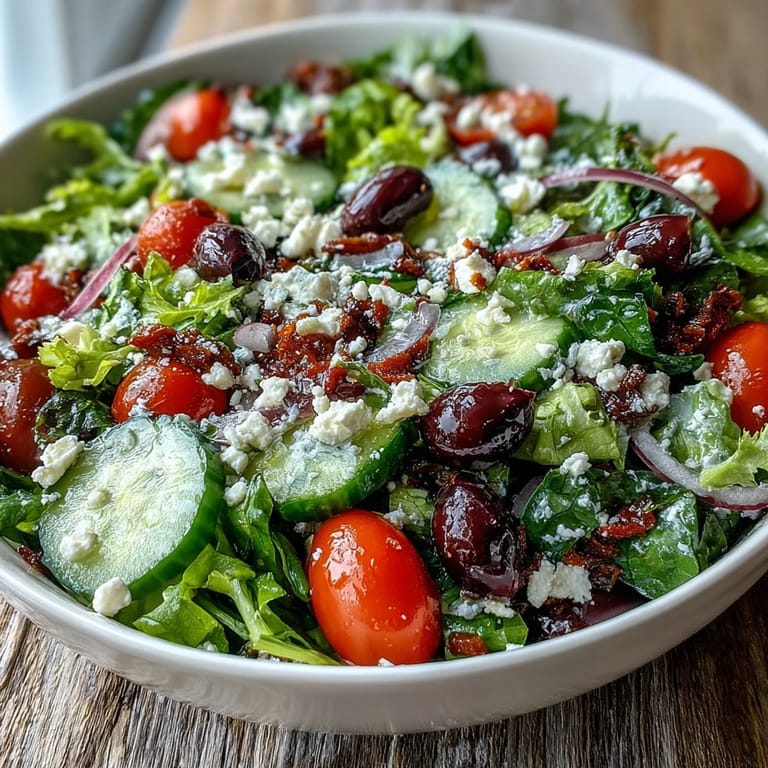
- Toss the spring mix, tomatoes, cucumber, halved olives, and thinly sliced red onion together in a large bowl, using your hands to combine gently so nothing bruises. The looseness here is important—you want every piece to have room to drink in the dressing.
- Whisk your dressing together:
- In a small jar or bowl, combine olive oil, red wine vinegar, oregano, minced garlic, Dijon mustard, salt, and pepper, then whisk or shake vigorously until it looks thick and creamy. This emulsification happens because of the mustard and the whisking action—stop when it looks unified instead of separated.
- Bring it together:
- Pour the dressing over your salad just before serving and toss everything gently with your hands or salad tongs so every leaf gets coated. Top with crumbled feta and serve immediately while everything is still crisp and bright.
 Save to Pinterest
 One afternoon, my daughter asked me why I loved salads when she'd always assumed I was a pasta person. I realized it was because salads feel like a conversation with the seasons—what's ripe, what's available, what tastes alive right now. That's when I understood this isn't just a recipe, it's an invitation to pay attention.
Making It Your Own
This salad is a foundation, not a rulebook. I've made it with grilled shrimp on top when I wanted something more substantial, and I've added chickpeas straight from the can when I needed plant-based protein. The beauty is that you can swap the greens based on what looks good, adjust the tomato-to-cucumber ratio depending on what's in season, and even play with the cheese—try crumbled goat cheese if you want something tangier, or skip it entirely if you prefer a lighter version.
The Dressing Magic
This Greek dressing is worth making in double batches and keeping in a jar in your fridge for most of the week. I learned this the hard way when I kept making it fresh every time and realized I was spending more time whisking than actually eating. The dressing won't stay perfectly emulsified, but that's not a failure—it's just vinaigrette being vinaigrette, and an extra shake brings it right back together.
Serving and Storage Ideas
Serve this salad as a light lunch on its own, a side dish next to grilled fish or chicken, or as part of a Mediterranean mezze spread alongside warm pita bread and hummus. If you need to pack it for lunch, keep the dressing separate and dress it just before eating to maintain that crisp texture that makes people actually excited about salad. The best part about salads is that they feel effortless but actually taste considered—like you cared enough to make something that nourishes and delights at the same time.
- Add toasted pine nuts or sunflower seeds for extra crunch and nuttiness.
- Warm pita bread is the perfect companion for scooping up every last bit of dressing.
- Make the dressing in advance and shake it well before using, since it naturally separates over time.
 Save to Pinterest
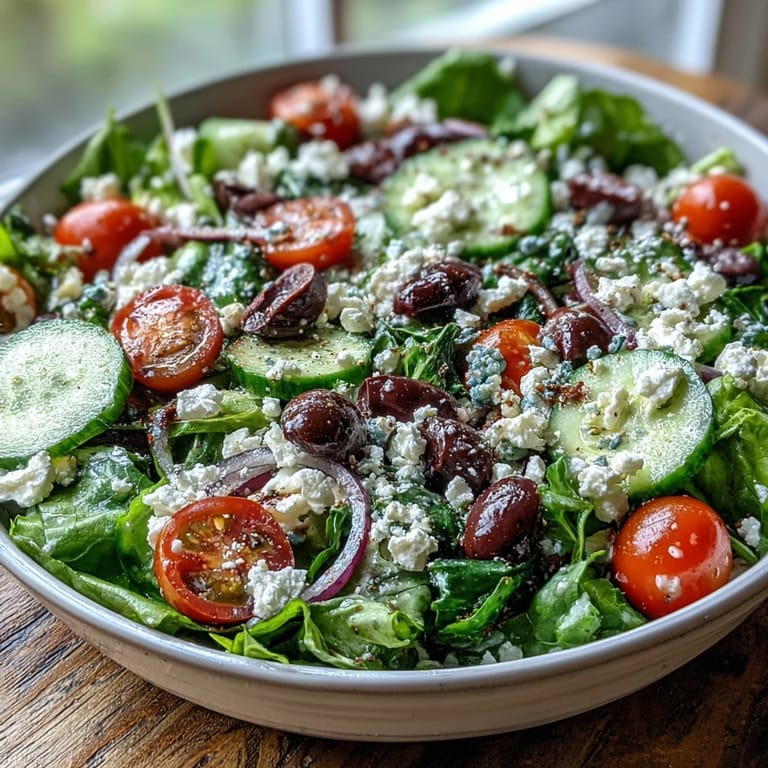
 This salad has become my answer to almost every question about what to eat, because it's honest food that tastes the way Mediterranean cooking is supposed to taste—bright, simple, and entirely about respecting what's on your plate. Make it often, and it will become the thing people ask you to bring.
Recipe Questions & Answers
- → How long does Mediterranean salad stay fresh?
Best enjoyed immediately after dressing. Undressed salad components stay fresh in the refrigerator for 2-3 days when stored in airtight containers. Keep dressing separate and toss just before serving.
- → Can I make this ahead for meal prep?
Yes. Layer ingredients in meal prep containers, placing hearty vegetables at the bottom and delicate greens on top. Store dressing separately and combine when ready to eat for optimal texture and freshness.
- → What protein additions work well?
Grilled chicken breast, pan-seared shrimp, roasted chickpeas, or quinoa all complement these Mediterranean flavors beautifully. Add protein portions of 4-6 ounces per serving for a complete meal.
- → How do I make it dairy-free?
Substitute crumbled feta with dairy-free feta alternatives made from almonds or coconut, or use extra olives and avocado for creaminess. The tangy Greek dressing remains naturally dairy-free when prepared as written.
- → What vegetables can I substitute?
Bell peppers, radishes, shredded carrots, or roasted eggplant work wonderfully. Feel free to adapt based on seasonal availability and personal preference while maintaining the Mediterranean flavor profile.
- → Is the dressing customizable?
Absolutely. Add fresh herbs like dill or parsley, substitute lemon juice for vinegar, or include a touch of honey for sweetness. The base of olive oil and acid provides endless variation possibilities.