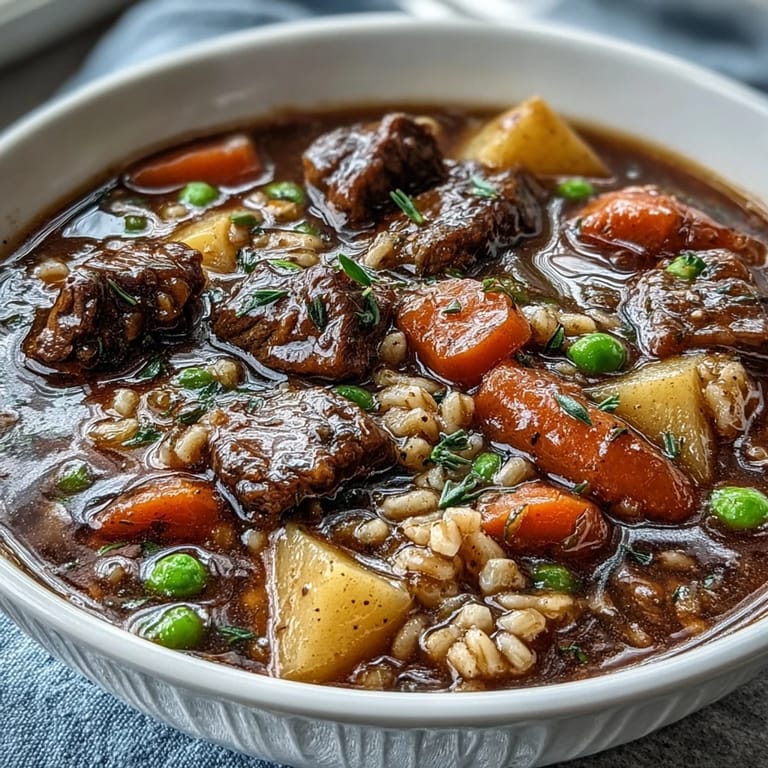
 Save to Pinterest
 My neighbor stopped by one October afternoon when the kitchen smelled like caramelized beef and herbs, and she asked what I was making before even stepping inside. That's when I realized beef and barley soup has this quiet power—it announces itself before you taste it, drawing people in with warmth and promise. I'd been making it for years by then, adjusting here and there, but that moment reminded me why I keep coming back to it: nothing feels quite as honest as a pot of soup that says, "I've been simmering while you lived your day."
I made this for my dad after his surgery when he was tired of everything tasting like nothing, and watching him actually finish a bowl without complaints felt like winning something. He went back for seconds, which he never does, and my mom asked for the recipe even though she'd tasted it a hundred times before. That's when I understood—this soup isn't fancy, but it carries intention, and people taste that.
Ingredients
- Beef stew meat (1 lb, cut into 1-inch cubes): Choose meat with a little marbling; it renders into tenderness and flavors the entire pot, which is why browning it first matters so much.
- Pearl barley (3/4 cup, rinsed): Rinsing prevents it from becoming gummy, and pearl barley specifically stays whole and chewy rather than turning to mush.
- Carrots (2 medium, peeled and diced): These sweeten as they cook, balancing the savory broth in a way that feels almost accidental but never is.
- Celery (2 stalks, diced): It's the quiet backbone of the flavor profile—not loud, just foundational.
- Onion (1 large, chopped): Yellow onions are forgiving and add sweetness; red ones can sometimes taste sharp by the end of cooking.
- Garlic (2 cloves, minced): Add it after the softer vegetables so it doesn't burn and turn bitter.
- Potatoes (1 cup, peeled and diced): They add substance without being heavy, and they thicken the broth slightly just through natural starch.
- Mushrooms (1 cup, sliced): These contribute umami depth—cremini or baby bellas work better than white buttons, which can water out.
- Frozen peas (1 cup): Add them late so they stay bright and don't turn gray and tired-looking.
- Diced tomatoes (1 can, 14 oz, drained): Optional, but they add acidity and complexity; draining prevents the soup from becoming too liquid.
- Beef broth (8 cups): Use good broth if you can—it's not fancy, it's practical, since the broth becomes the entire soul of this dish.
- Bay leaves, dried thyme, dried parsley: These three work together quietly; you won't taste them individually, but you'll notice the difference if they're missing.
- Olive oil (2 tbsp): High enough heat point to brown the meat without smoking.
- Salt and black pepper: Add salt slowly and taste at the end; the broth is often saltier than you expect.
Tired of Takeout? 🥡
Get 10 meals you can make faster than delivery arrives. Seriously.
One email. No spam. Unsubscribe anytime.
Instructions
- Brown the beef until the kitchen smells like it matters:
- Heat oil in a large pot over medium-high heat and add beef cubes in a single layer without crowding; let them sit for 2-3 minutes before stirring so they actually brown instead of steaming. This creates flavor that no amount of later cooking can replace.
- Soften the foundation vegetables:
- In the same pot, add onions, carrots, celery, and mushrooms; cook for 5 minutes while scraping up the browned bits stuck to the bottom—that's liquid gold. The pot will smell different now, richer.
- Bloom the garlic:
- Add minced garlic and stir constantly for about 1 minute; you'll smell it sharpen then mellow, and that moment is exactly when it's ready.
- Bring everything together:
- Return the beef to the pot, then add potatoes, barley, tomatoes if using, broth, and all the herbs; stir until the barley floats on its own like it belongs there.
- Simmer low and slow:
- Bring to a boil, then drop the heat to low, cover, and let it bubble gently for an hour, stirring occasionally so nothing sticks or burns. This is when you can step away, knowing the soup is becoming itself.
- Finish with the fresh notes:
- Add the peas, taste carefully for salt and pepper, then simmer uncovered for 20-30 minutes more; the barley will be tender, the beef will shred if you look at it sideways, and the peas will still taste like peas.
- Final touches:
- Fish out the bay leaves—they're easy to miss but hard to forget if you bite one. Adjust seasoning one last time; it should taste like comfort, not like salt.
 Save to Pinterest
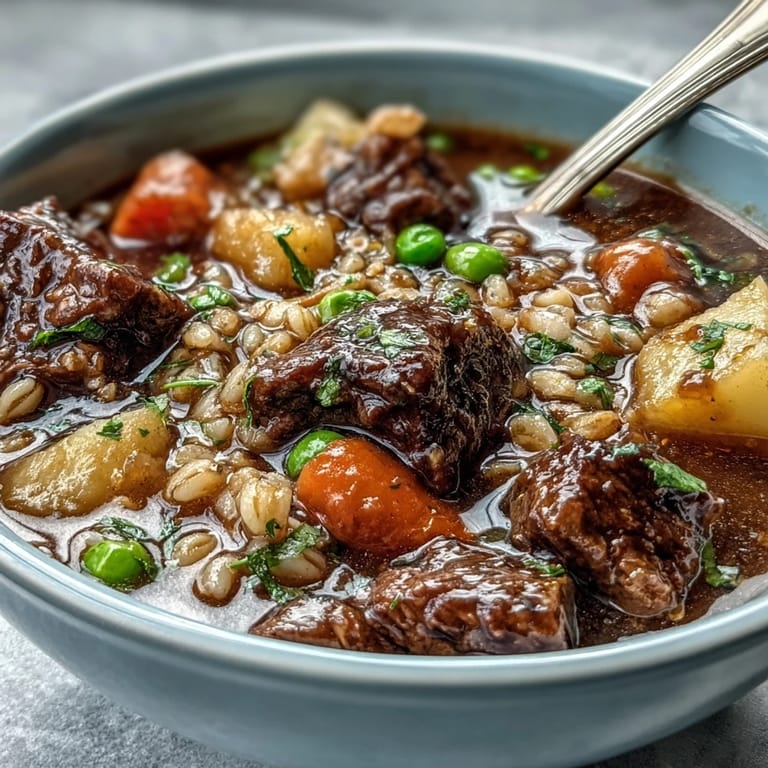
 There's a moment near the end of cooking when you lift the lid and the steam hits your face and you just know it's right—the beef is falling apart, the barley has that slight resistance when you bite it, and the broth has become something entirely different from what you started with. That's when you realize this soup isn't about impressive technique; it's about patience and attention, and somehow that feels more valuable.
Why Barley Changes Everything
Most people think soup is just broth with things floating in it, but barley transforms the entire experience. It's chewy, it holds flavor, it makes the soup feel substantial without being heavy—it's the difference between something you drink and something you actually eat. I tried making this with rice once and it fell apart into mush; I tried pasta and it got mushy; but barley just sits there, perfect and patient, exactly as it should be.
Making It Your Own
This recipe is forgiving enough to bend without breaking. Some people add parsnips or turnips for earthiness, others skip the mushrooms if they don't love them, and a few brave souls have thrown in a splash of red wine. The structure stays the same—brown the meat, soften the vegetables, add the broth and barley, simmer until everything is tender—but within that frame, you can move things around. That flexibility is why I keep making it; it feels like my recipe even though it's everyone's recipe.
- For extra richness, use half broth and half beef stock if you have it.
- A splash of Worcestershire sauce added at the end deepens the flavor without making it taste different.
- Let it cool slightly before serving so the flavors settle and taste more pronounced.
Storage and Second Life
This soup is almost better the next day when the flavors have had time to become friends rather than acquaintances. It keeps in the refrigerator for up to 4 days, or you can freeze it for up to 3 months—I usually freeze it in portions so I can grab a container on nights when cooking feels impossible. When reheating, add a little extra broth because the barley continues absorbing liquid even while sitting, and stir gently so you don't break apart the beef.
 Save to Pinterest
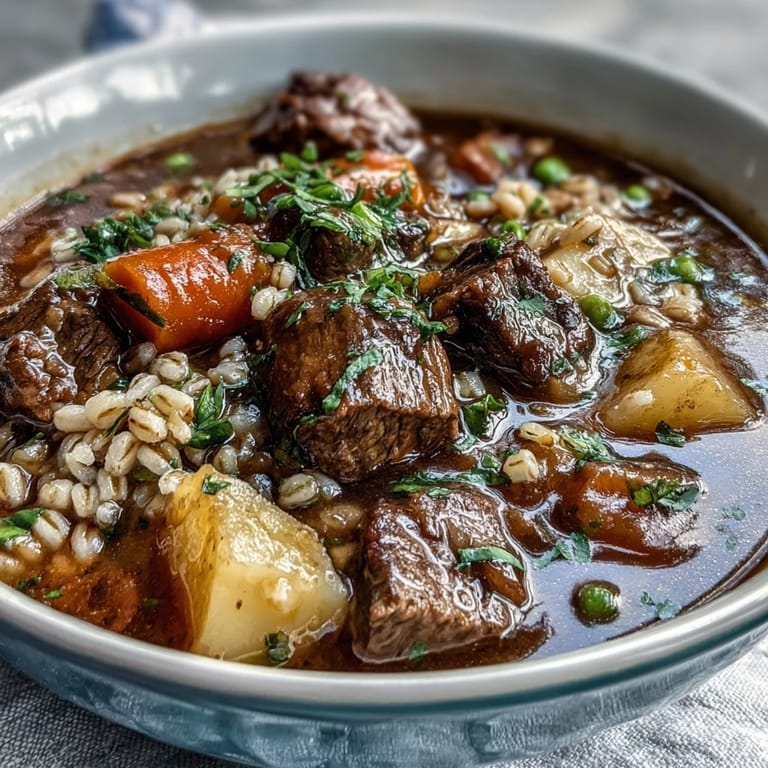
 This soup is the kind you make when you want to say "I care" without announcing it loudly. Serve it hot in a wide bowl with crusty bread and maybe a glass of wine, and watch what happens—people slow down, they talk longer, they ask for seconds.
Recipe Questions & Answers
- → Can I use a different cut of beef?
Yes, you can use chuck roast cut into cubes or even ground beef for a quicker cooking time. Chuck roast will give you the most tender, flavorful results.
- → How do I store leftovers?
Store in an airtight container in the refrigerator for up to 4 days. The soup can also be frozen for up to 3 months. Note that the barley will absorb more liquid as it sits.
- → Can I make this in a slow cooker?
Absolutely. Brown the beef first, then add all ingredients except peas to your slow cooker. Cook on low for 6-8 hours or high for 4-5 hours. Add peas during the last 30 minutes.
- → What can I substitute for pearl barley?
You can use farro, wheat berries, or brown rice. Keep in mind that cooking times may vary depending on the grain you choose.
- → Why is my soup too thick?
Barley absorbs a lot of liquid as it cooks and continues to absorb when stored. Simply add more beef broth or water when reheating to reach your desired consistency.
- → Can I add other vegetables?
Yes, parsnips, turnips, green beans, or corn work wonderfully. Add hardy vegetables at the beginning and delicate ones near the end of cooking.