 Save to Pinterest
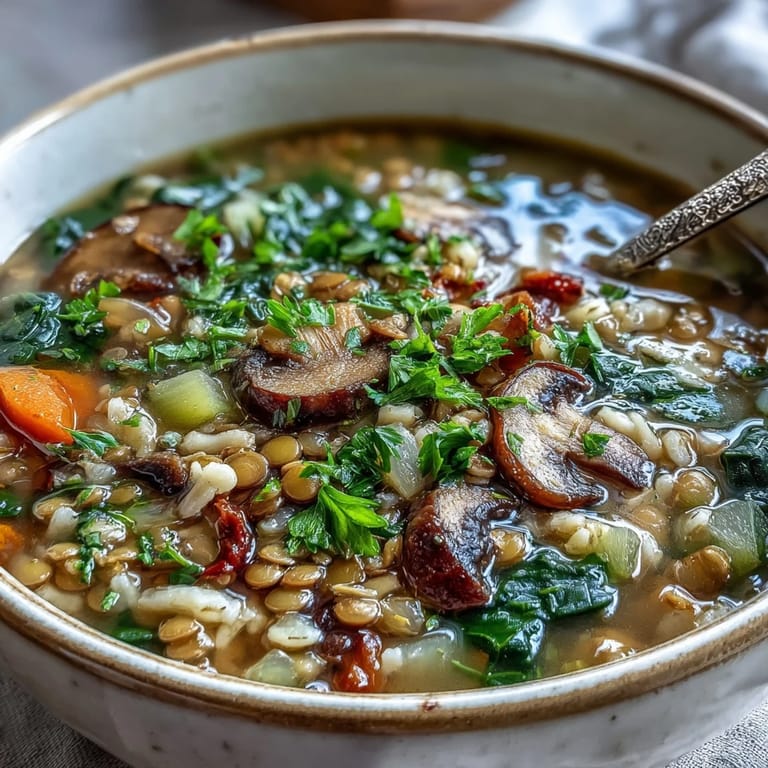
 There's something about the smell of mushrooms hitting hot oil that makes me pause mid-chop and just breathe it in. That's when I know a soup is going to be good. This double lentil and barley creation came together one gray afternoon when I wanted something hearty enough to silence the rumbling in my stomach but gentle enough not to weigh me down. The combination of red and brown lentils creates this unexpected creaminess, while the barley adds a subtle chew that keeps things interesting.
My neighbor knocked on the door mid-stir holding two mason jars and a sheepish grin, claiming she could smell my kitchen from her place. She stayed to watch the pot come together, and by the time I ladled out bowls, she was asking for the recipe. Now she makes it on Thursdays, and I always know when she's cooking because I catch that same mushroom-and-thyme smell drifting across the fence.
Ingredients
- Red lentils: These break down slightly and thicken the soup naturally, adding body without cream or flour.
- Brown lentils: They hold their shape better than red ones, providing texture contrast and earthiness that grounds the whole dish.
- Pearl barley: Rinsing it first prevents excess starch from making the soup cloudy, and it absorbs flavors beautifully as it cooks.
- Cremini or button mushrooms: Let them brown properly in the oil before adding liquid—this is where the umami lives, and rushing it wastes the potential.
- Collard greens: They're tougher than spinach, so they won't disintegrate into the broth and maintain a slight bite even after cooking.
- Vegetable broth: Quality matters here since it's the foundation; a thin or overly salty broth will undermine everything else.
- Smoked paprika: Just a teaspoon adds depth without overpowering, giving the soup a subtle warmth that feels almost mysterious to people tasting it.
Tired of Takeout? 🥡
Get 10 meals you can make faster than delivery arrives. Seriously.
One email. No spam. Unsubscribe anytime.
Instructions
- Get your aromatics going:
- Heat olive oil over medium heat and add the diced onion, letting it soften for a few minutes until it releases its sweetness and loses that raw edge. The kitchen will start to smell inviting already.
- Build the flavor base:
- Stir in garlic, carrots, and celery and give them another 3 to 4 minutes. You're not trying to cook them all the way through yet—just enough to wake them up and let them start mingling with the oil and aromatics.
- Let the mushrooms have their moment:
- Add your sliced mushrooms and cook, stirring occasionally, until they've released their moisture and started to brown, roughly 5 minutes. This browning is not optional—it's the moment the soup gains its soul.
- Add the foundation grains:
- Stir in both lentils and the barley along with thyme, smoked paprika, and bay leaves, coating everything in the oil and letting the spices toast for just a few seconds. You'll notice the aroma shift as the spices wake up.
- Bring it all together:
- Pour in your vegetable broth and water, bring everything to a boil, then immediately reduce the heat to a simmer and cover the pot. This is the patient part where you trust the process for about 30 minutes.
- Add the greens and finish:
- Stir in the collard greens, salt, and pepper, then simmer uncovered for another 10 to 15 minutes until the barley and lentils are tender but not mushy. This is when the soup transforms from fragmented ingredients into something cohesive and warming.
- Taste and adjust:
- Remove the bay leaves and taste as you go, adding salt, pepper, or even a squeeze of lemon if you feel it needs brightness. Season thoughtfully—you want people to taste every element, not just salt.
 Save to Pinterest
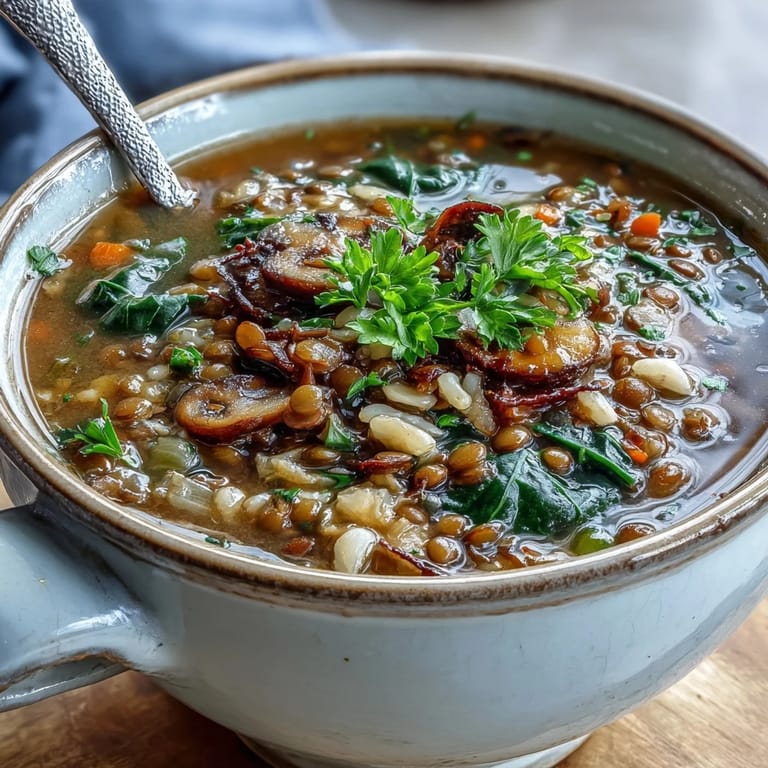
 One evening, a friend who usually orders takeout sat across from me eating a full bowl and actually paused between spoonfuls, something I'd never seen her do before. She didn't say much, just kept eating quietly, and that silence felt like the highest compliment a cook can receive. There's power in feeding someone something you made that actually nourishes them.
The Magic of Rinsing Your Grains
I learned the hard way that rinsing lentils and barley isn't just a suggestion—it's the difference between a clear, glossy soup and one that looks muddy and feels gritty. I used to skip it thinking I was saving time, but ten minutes into cooking I'd watch the broth turn cloudy and realize I'd made a mistake. Now I rinse everything under cold water in a fine-mesh strainer, letting the starchy dust wash away, and the final soup rewards that small effort with a clean, jewel-like appearance.
Playing With Substitutions
This soup is forgiving enough to welcome changes without falling apart. I've swapped the barley for short-grain brown rice on mornings when my gluten-free friends were coming over, and the texture shifts slightly but the soul remains intact. The collard greens can become kale or Swiss chard depending on what's at the market or what's looking fresher that day—different greens bring different personalities, but the structure of the soup stays solid enough to handle it.
Timing, Leftovers, and Lemon
This soup reaches its peak on the second day after the ingredients have truly merged into something greater than their individual parts. I usually make a double batch knowing the first portion is just the opening act. The real magic happens when you reheat a bowl the next morning and suddenly realize you've been thinking about it all night without even noticing.
- A squeeze of fresh lemon juice just before eating brightens everything and cuts through the earthiness in the best way possible.
- Store in airtight containers in the fridge for up to five days, or freeze portions in smaller containers for grab-and-go meals on hectic weeks.
- If the soup thickens too much over time, add a splash of broth or water when reheating to restore the original consistency.
 Save to Pinterest
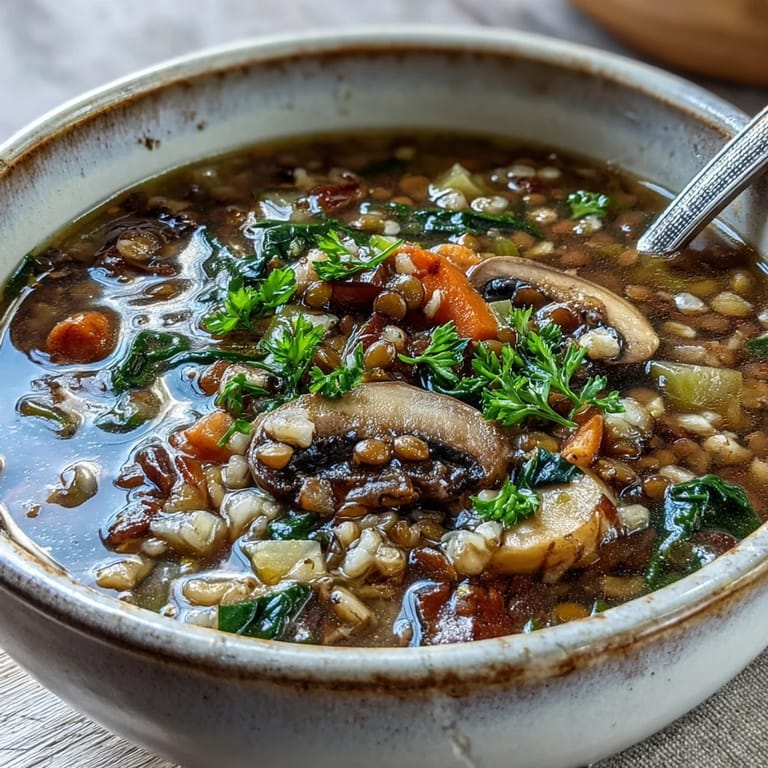
 This soup proves that nourishment doesn't need to be complicated, just thoughtful. Make it once and it becomes a friend you return to whenever you need something real.
Recipe Questions & Answers
- → Can I substitute the barley with another grain?
Yes, you can use short-grain brown rice or quinoa for a gluten-free version. Adjust cooking time as needed since these grains may cook faster than barley.
- → What mushrooms work best in this soup?
Cremini or button mushrooms are recommended, but you can also use shiitake, portobello, or a mix of your favorite varieties for deeper flavor.
- → Can I use different greens instead of collard greens?
Absolutely. Swiss chard, kale, or spinach are excellent substitutes. Add spinach during the last 5 minutes of cooking as it wilts quickly.
- → How do I store leftover soup?
Store in an airtight container in the refrigerator for up to 5 days. The soup thickens as it sits, so add extra broth or water when reheating.
- → Can I make this soup in a slow cooker?
Yes, sauté the vegetables first, then transfer everything to a slow cooker. Cook on low for 6-7 hours or high for 3-4 hours, adding greens during the last 30 minutes.
- → What can I add for extra flavor?
Try adding a squeeze of fresh lemon juice before serving, a splash of balsamic vinegar, or a pinch of red pepper flakes for heat. Fresh herbs like parsley or dill also brighten the flavor.